Growing up in Poland, my grandmother had a garden overflowing with flowers. She was devoted to collecting unusual blooms. I remember reaching for a delicate bluebell and being gently but firmly told not to pick it – they were being grown to sell.
We’d drive to the market in her tiny Fiat 126 with buckets of freshly cut tulips and peonies. Everything was handled carefully – lifted, arranged, transported.
That sense of care stayed with me.
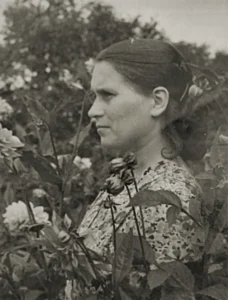
Nana Bronia in her garden, Mieszkowice, Poland
An invitation
About a year ago, I was invited to exhibit work at Auckland Botanic Gardens.
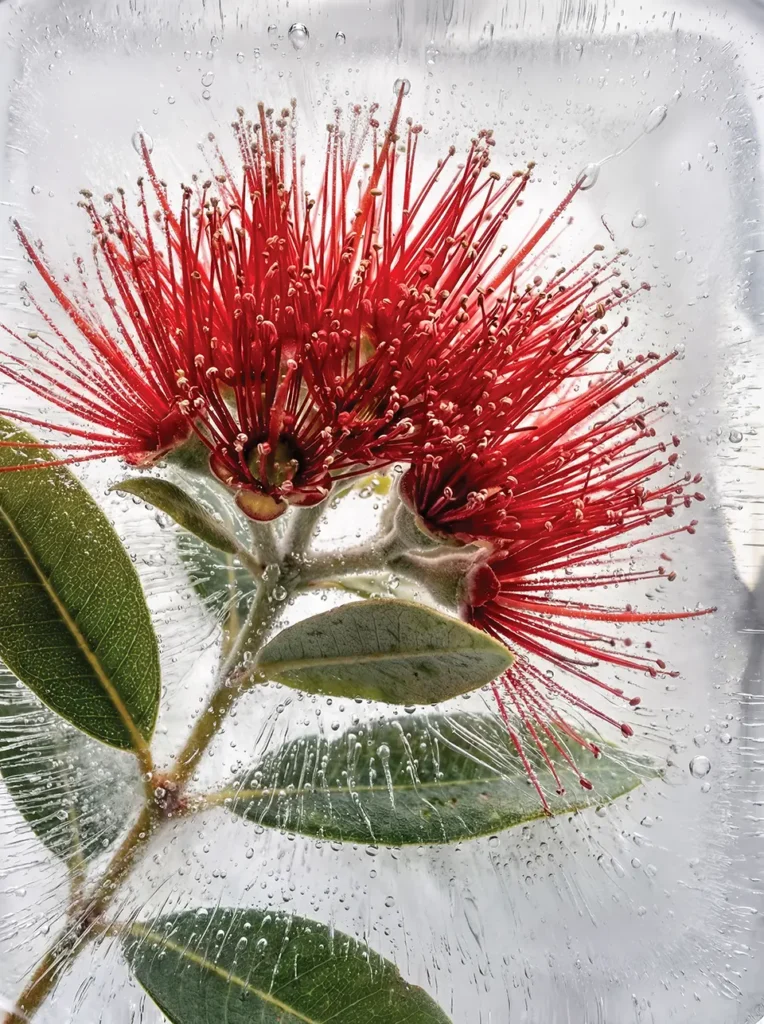
I knew I wanted to work with native New Zealand flowers – but show them differently. Freezing them was the idea that stuck.
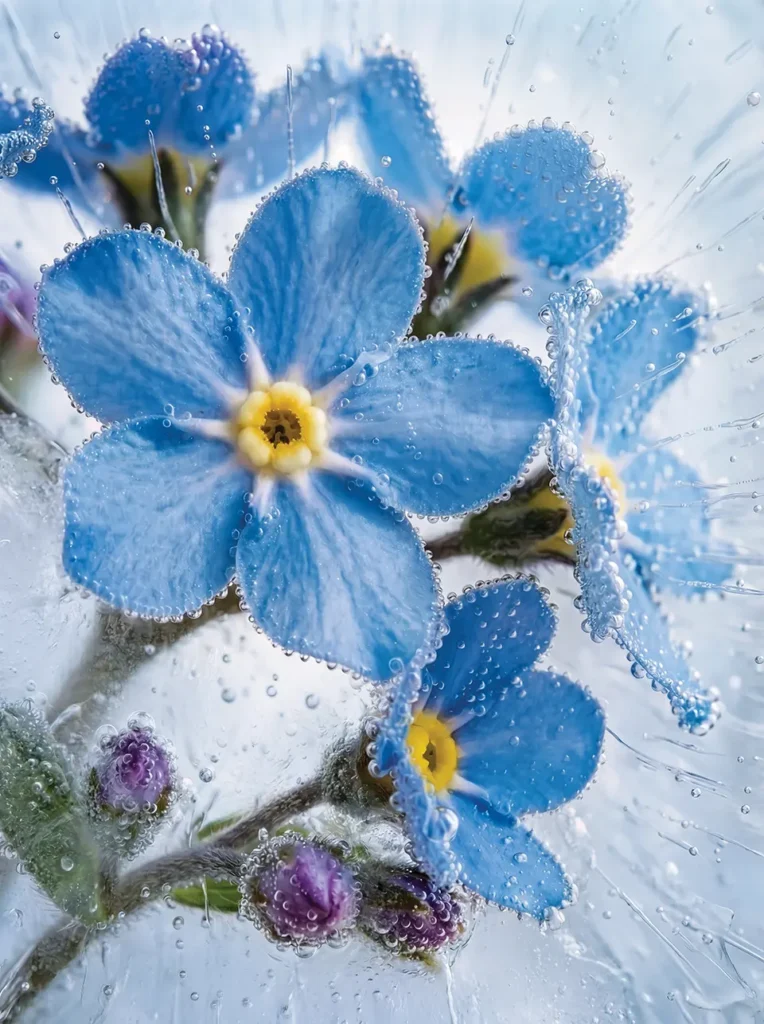
What happens when a flower is suspended in ice?
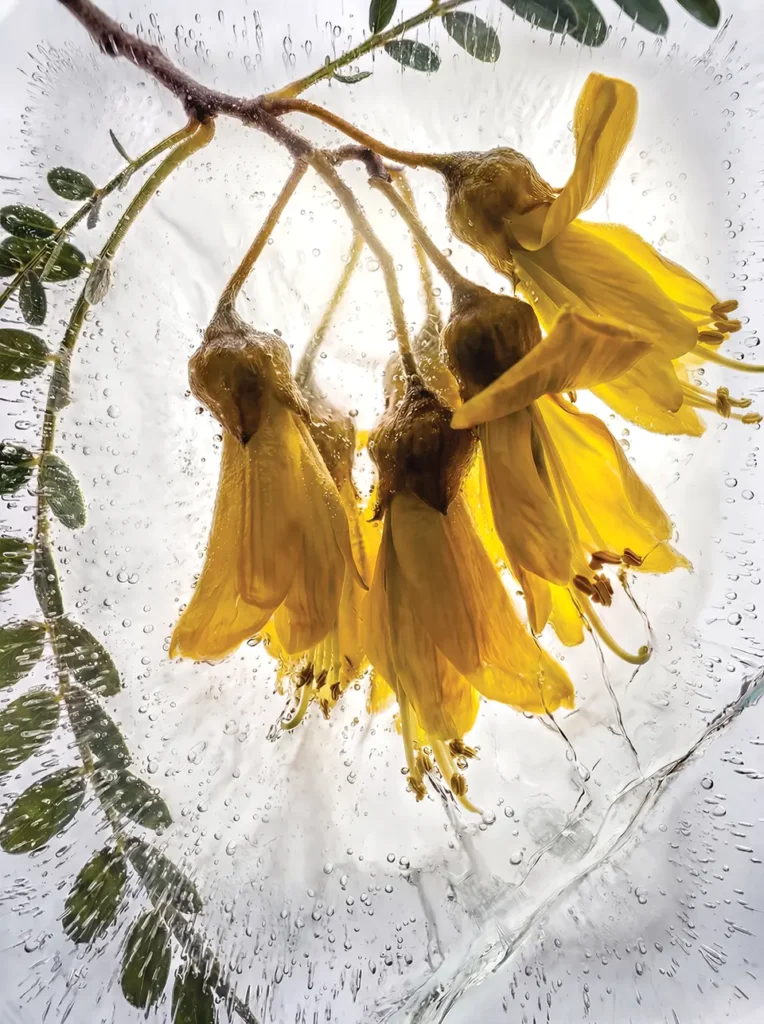
As the water freezes and light begins to pass through it, the image starts to change. Edges soften. Colours scatter. Parts of the flower break into small points. It still reads as a flower – but parts of it are harder to make out.
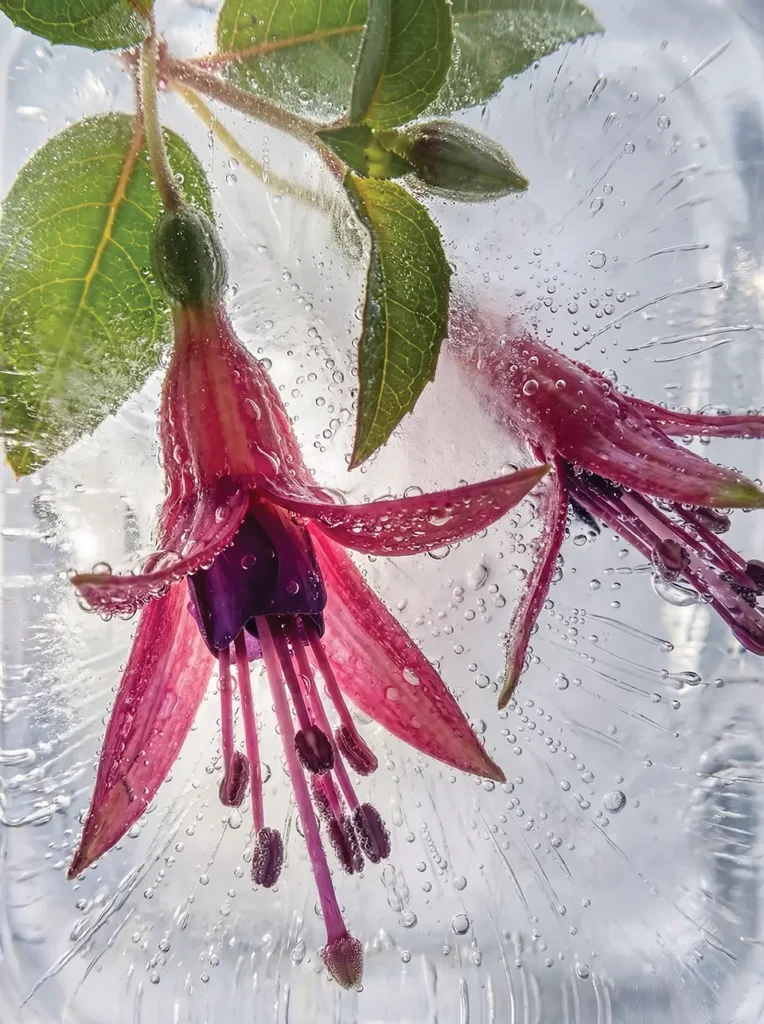
In the Kōtukutuku (Fuchsia excorticata) image, New Zealand’s native fuchsia, the effect is especially noticeable. The hanging forms stretch and shift slightly, their edges displaced as the ice refracts them.
A different path into abstraction
Painters have been abstracting images for over a century – sometimes with dots or loose marks. Here, it happens through ice, as light shifts the way the flower is seen.
Artists like Georges Seurat and Paul Signac broke images into small points of colour, letting the eye complete the picture. Later, painters such as Claude Monet and Gerhard Richter pushed images further away from clarity, letting them dissolve into light, atmosphere, or blur.
In all of these cases, abstraction comes from the artist’s hand – from decisions made with paint.
Here, that role shifts. The abstraction isn’t painted. It’s produced through the material itself – through water, ice, and the way light passes through them.
Instead of building an image up, the material does the work.
What we see – the colour, the brightness – comes from how light interacts with it.
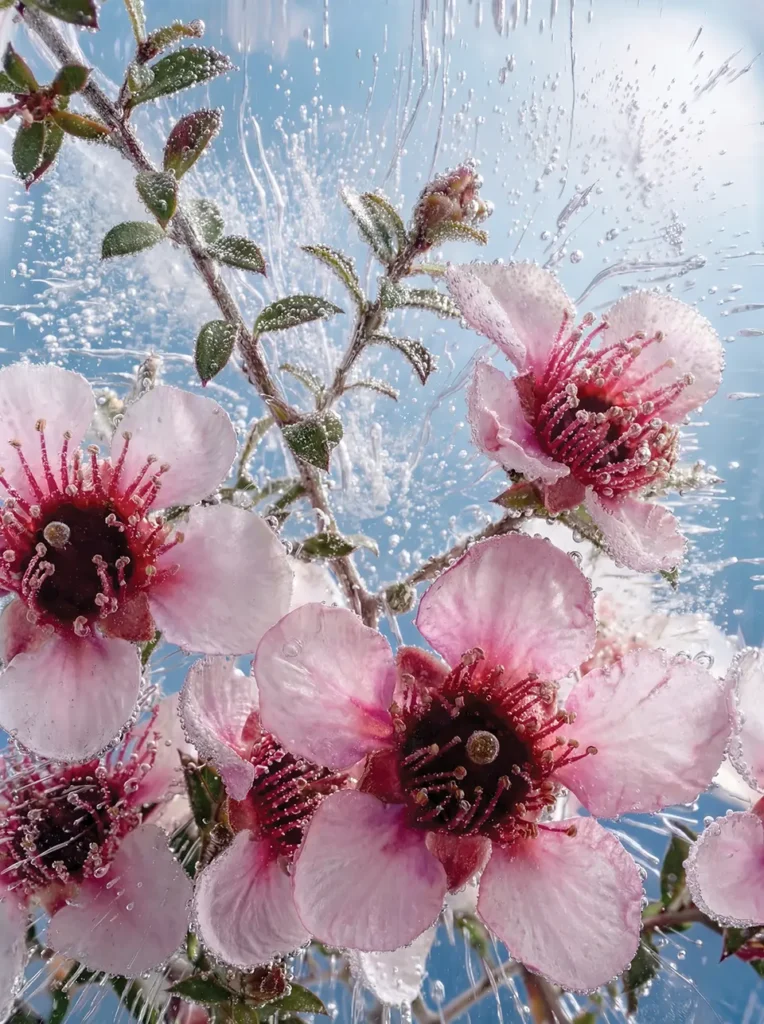
Seeing the image shift
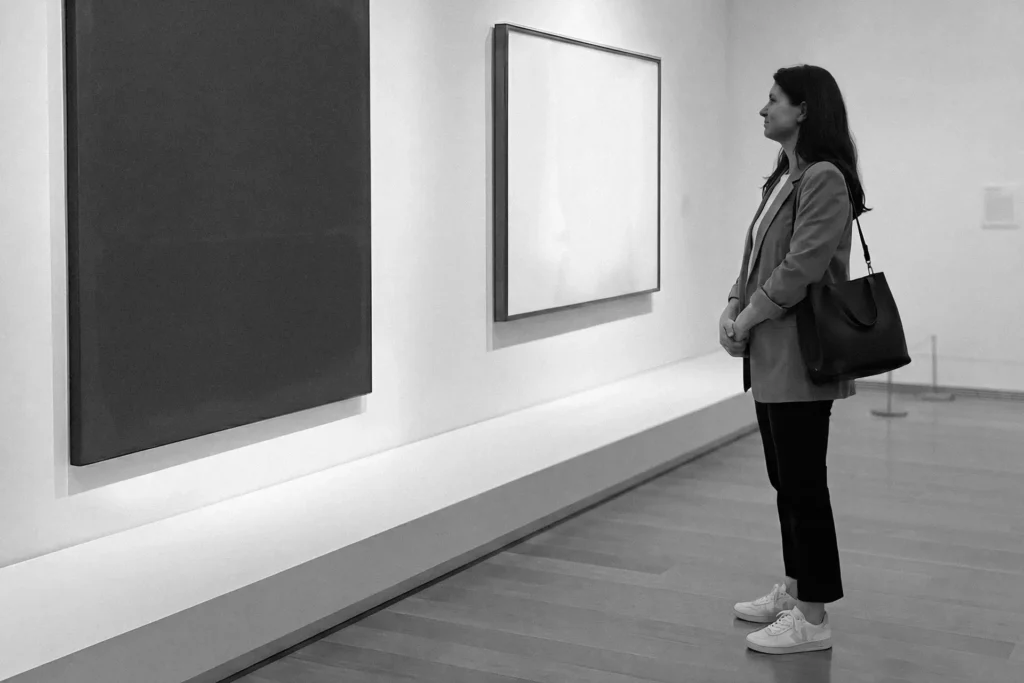
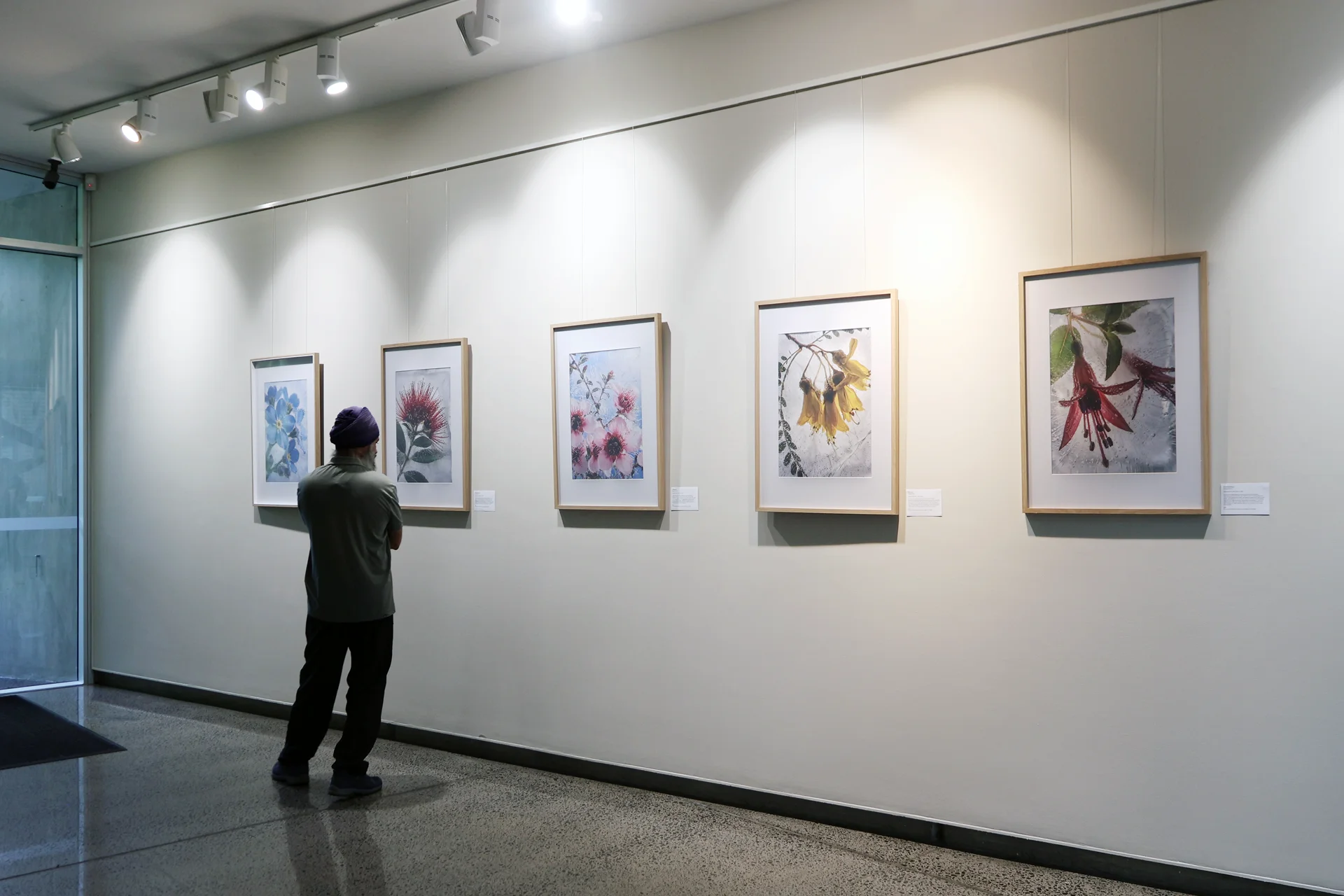
Seeing these works on display, I noticed people pausing in front of them a bit longer than usual. I overheard someone say, “oh, they’re in ice.”
The ice creates a kind of double-take. You look again, just to be sure.
That small delay matters. Not in a big, dramatic way – but just enough to change how the flower is seen.
Using ice as a medium opens up a different way of working with images.
Instead of deciding exactly how something should look, I set up the conditions and let the material take over part of the process. Water freezes. Light bends. The image responds.
It slows you down. You linger a moment longer with it – long enough to appreciate its beauty.
That feels familiar.
They’re still just flowers.
But they’re a little harder to ignore.